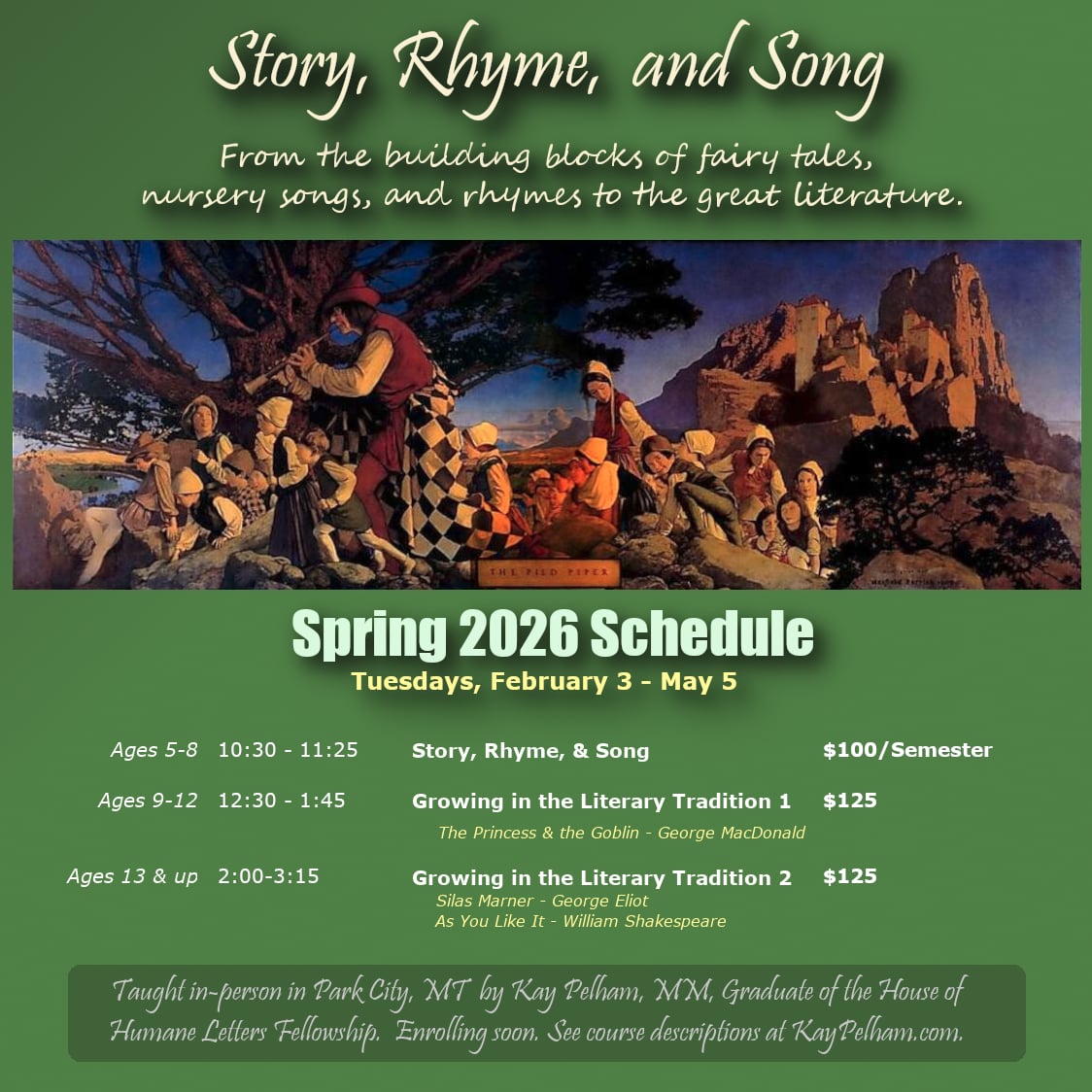
The descriptions below are for the Spring semester beginning February 3, 2026.
I have designed these classes to build a solid foundation for your student, using the delightful building blocks of story, rhyme, and song that underlie so much of our language and culture.
Nursery rhymes and folk songs contain so many of the basic elements from which our very culture and its language and arts are built. These short-and-fun works of art have traditionally been a big part of the way that children learn the basics of speech and of singing.
Meanwhile, traditional stories (literary critic Northrop Frye considered Bible stories, fairy tales, fables, myths, and legends, as ‘building blocks’) set children up to be able to read and connect with the ‘good literature’ they encounter in their upper years of school, and on to the ‘great literature’ of their adult years. These ‘building blocks’ make regular use of image and metaphor, which devices have been used in story-telling in every human culture since the beginning of our time on this planet. Add to that the casual telling back (narrating) of the stories, and the young mind has just the work it needs to grow in this age-old way of thinking and communicating ideas in community.
Children are naturally ready for these things at a young age, and thrive when they are given access to such material in the right kind of atmosphere. These courses are designed to provide that atmosphere, whether they’re beginning at age 5 or getting started later. Because I believe these stories, rhymes, and songs should be a part of every family culture, I encourage parents to sit in the classes themselves if they feel a little rusty and would like some examples of how they might use these at home with their children. If your family’s not already enjoying such material extensively at home, think of these classes as a primer to get you started!
Story, Rhyme, & Song I (ages 3-5)
THIS CLASS WILL NOT BE MEETING SPRING, 2026
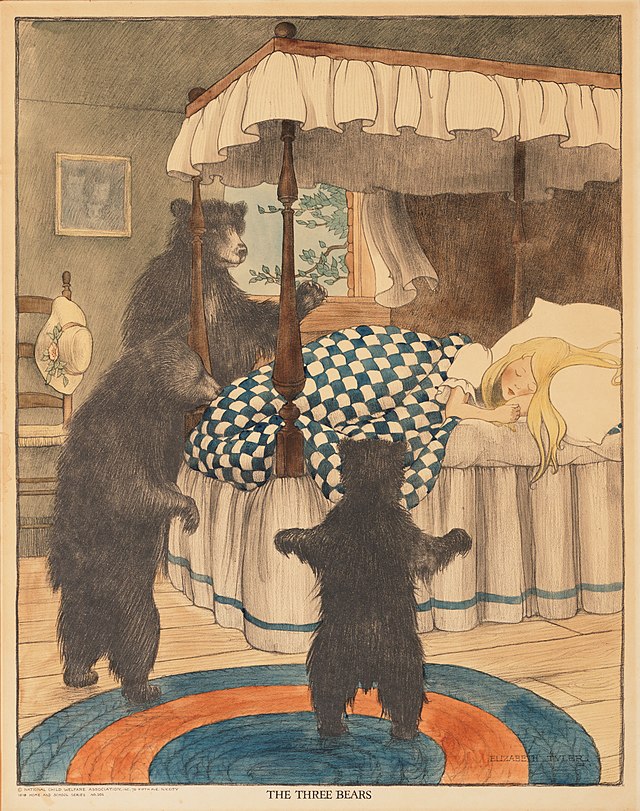
This class focuses on nursery rhymes and songs, and hearing traditional stories —which will be selected from Bible stories, fairy tales, fables, myths, and legends.
Most of the rhymes and songs are designed to be memorable, and with repetition and the fun of the rhythm and word play, I’ve no doubt they will become memorized and enjoyed for years to come. There will also be some introductory instruction in phonics (letter sounds, consonant-vowel-consonant words), as well as beginning Solfège, which is a system of naming musical tones that helps musicians gain some understanding of how the tones relate to one another (Do-Re-Mi).
One parent is invited to sit in with the student, though this is not required.
Story, Rhyme, & Song II (ages 5-8)
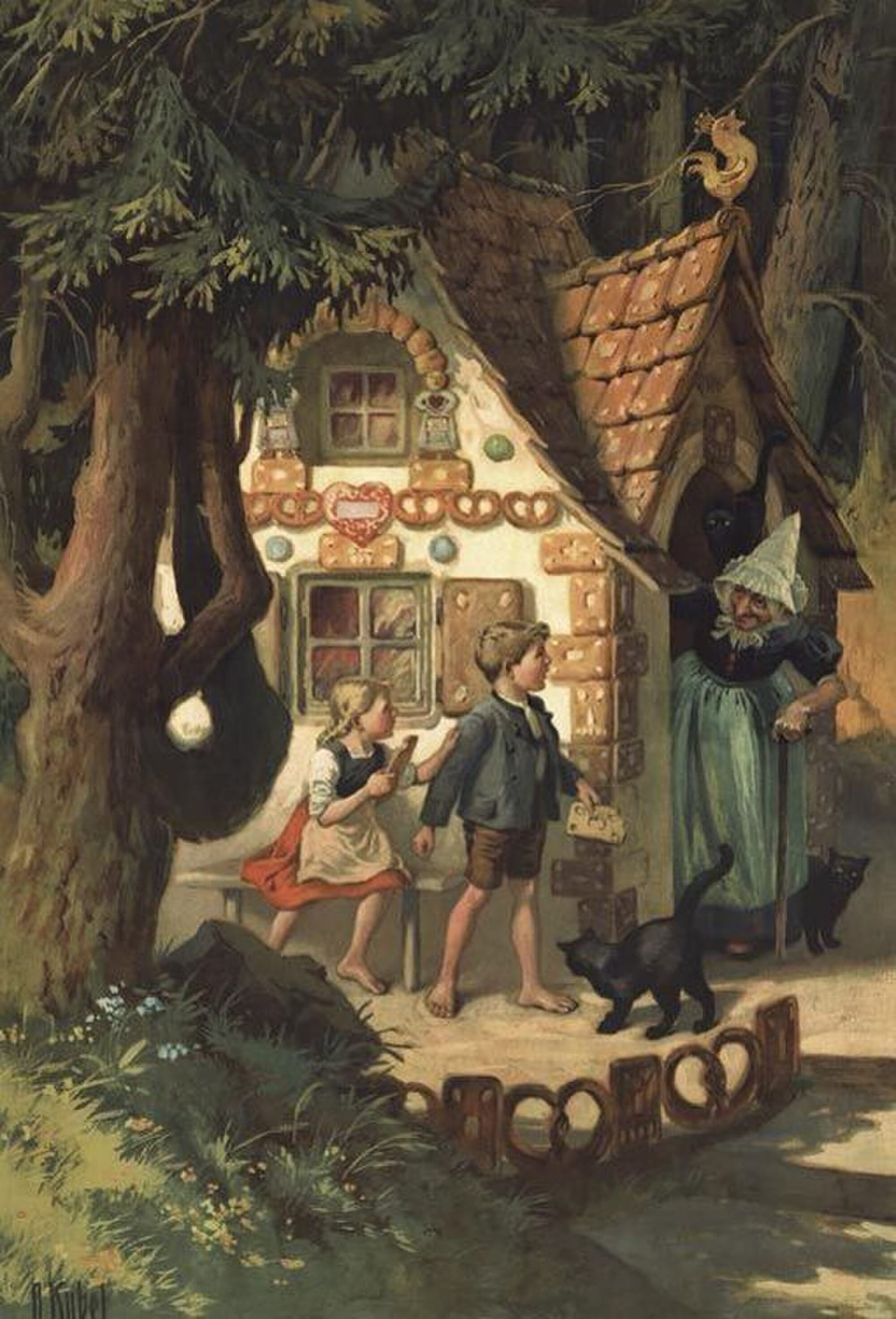
This class will continue with the elements of Story, Rhyme, & Song I, while adding student narration of the stories read to the class. The students will simply be telling back, in their own words, the story that has just been read. You may consider this oral narration as it’s used in a Charlotte Mason education, as well as practice in story-telling. The stories will be age-appropriate (a level above the younger class). And with this group, we move from nursery rhymes to standard poetry, and from nursery songs to traditional folk songs. Lessons in Solfège will continue at this level. This class will also have Charlotte Mason style Picture Study. Click here for brief description.
One parent is invited to sit in with the student, though this is not required.
Growing in the Literary Tradition (ages 9 and up)
(January, 2026) In the past this section began thus: This level shifts the focus away from Song and onto Story and Poetry. However, with most of the current students at the first level having come through my SRS level, I am choosing to add a portion of singing the songs with which they’ve become familiar. As for the Story portion, the students in both levels will be lead through classic works of fiction, written in the literary tradition that precedes our modern era, learning to read them metaphorically, based on universal story forms and patterns, images and metaphors that have connected humans from ancient times to the middle ages, only lost in our modern era. Each week we will also read a selection from a chosen poet for the semester.
Spring, 2026 Books

Middle School – Myths & Fairy Tales (links provided in class); The Princess and the Goblin by George MacDonald
High School – Myths & Fairy Tales (links provided in class); Silas Marner by George Eliot; As You Like It by William Shakespeare
Students who have taken the Fairy Tale class (see below), as well as those who have previously taken GLT classes, will have an edge up on this metaphorical way of reading, but we will do our best to bring others up to speed by reading some shorter works (fairy tales and myths) in the first week, demonstrating this traditional approach to story, noting standard story patterns, shapes, and images.
How to Read a Fairy Tale: A Primer for Reading Metaphorically (ages 10 to adult)
This class is not currently scheduled, but can be worked into the schedule if an appreciable number of people express interest.
Over 8 weeks we will identify the fairy-tale patterns, story shapes, and various motifs and images. My own experience has been that I find these elements in all stories, and it has enhanced my ability to read all stories in this literary tradition. Links will be provided for the various tales that we will be reading. Students will pre-read, and then be ready for the lesson and the walk through the story each week.
REGISTRATION
To register, please send an email to kay@kaypelham.com. You will be sent an information sheet to complete and return by email.
If you’d like to discuss it further, feel free to contact me here.